-
20 Oct 2017
-
Por: Dinet
OPERATIONAL EXCELLENCE: ORE HAULING IN SUCCIT
With the last presidential elections in the USA, there was a temporary rise in commodity prices (19.4%), and then the price of copper fell by 4.75%, in line with the trend towards correction after Trump's victory. If we add to this the weak figures of the Chinese economy, we see that the future of commodity prices is no more auspicious than it was a few weeks ago. The most visionary companies are always looking for operational excellence in their production chains. In this sense, in the case of mining, mining contractors become key pieces for such an undertaking, since, as we all know, a large part of the mining processes are outsourced to mining contractors. For this reason, at Dinet, we permanently seek operational excellence in our services that we offer to mining, through the integration and automation of processes.
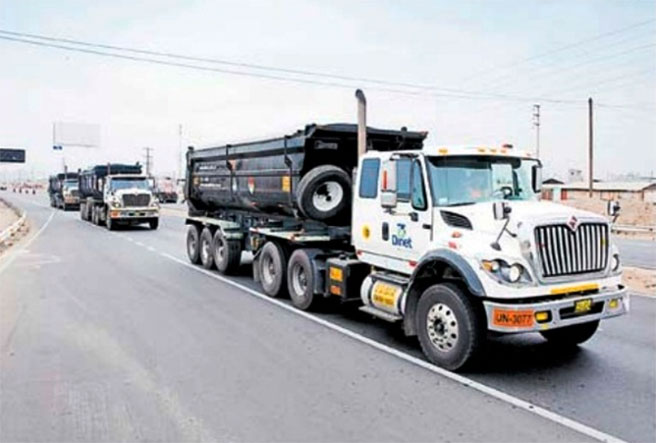
One of the most important processes in a mine is the transport of mineral, which in the case of surface mining represents approximately 50% of the cost of the mine. Great advances have been made in the monitoring and measurement of hauling and loading processes. The equipment involved (dump trucks, excavators) have GPS and real-time telemetry equipment, which allows for the measurement of geolocalized productivity and costs in all phases of loading and hauling of mineral. One of the best-known products on the market for managing fleets of surface equipment is the Dispatch software. There are also versions for underground mining, but these require investment in equipment to implement a Wi-Fi network in the tunnel, which allows communication between equipment and the use of radio frequency tags (RFID) for the geolocation of mobile equipment underground. In the case of underground mining, hauling represents approximately 15% of the mining cost.
This is obviously a considerable investment by the mining company, and in Peru to date there are no mining operations in tunnels that have this infrastructure. Therefore, at Dinet, aware of these opportunities, we are implementing a fleet management system for the management of underground equipment, not in real time but in Batch, since we do not have the WIFI network or RFID tags in the underground mining operations in which we work.
We have developed internally, a surface equipment management system that through GPRS signal communicates and sends information to each other, in real time. In the case of underground, the information is stored in an internal memory and when they come to the surface, the information travels to the servers via WIFI, for the respective analysis (Batch process). We have automated the process of controlling trips in the tunnel, as shown in the following Table 1:
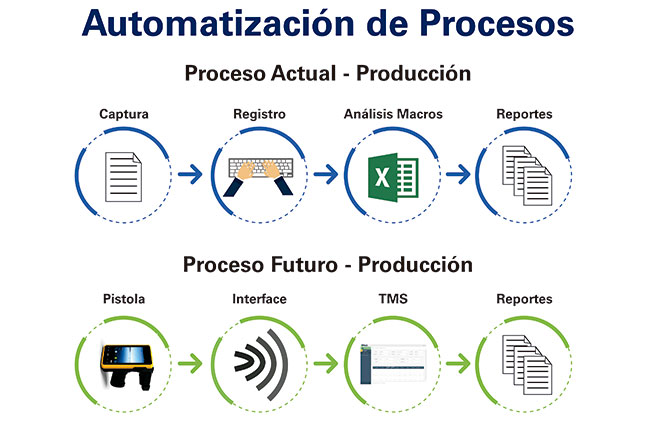
We hope that when this system is 100% operational, we can improve our productivity by 5% to 8% for the mineral transport fleet of one of our mining operations. We believe that this software represents an intermediate stage before having real-time information once the necessary communications infrastructure is available underground. This system is easily scalable to work with a WIFI network and RFID tags.
With this tool we can measure the transport process, identify productivity on duty, by operator, and unproductive times. Also, at the beginning of each shift, the allocation of vehicles and trips to each loading point in the tunnel is loaded into the system. This work plan (budgeted) is compared with the executed one, to analyze the deviations and optimize them.
This initiative by Dinet is in line with our permanent objective of improving and optimizing the cost of our clients' logistics chains, conscious of a permanent search for operational excellence.